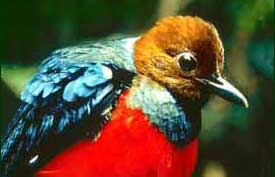
Red-Bellied Pitta
Pitta erythrogaster
A rare shaft of sunlight reaching the forest floor may illuminate a crimson breast and a flash of metallic-blue wings.
More than 135 species of birds have been found on Mount Isarog. Most of them (116 species) breed on the mountain and never move far from home; only 19 are migratory species that breed in the temperate zone, far to the north. The variety of these birds is dazzling—eleven species of hawks, eagles, and falcons; eleven wild pigeons and doves; five species of kingfishers; eight thrushes; two kinds of hornbills; six Cuckoo-shrikes; six sunbirds; eleven cuckoos; and dozens of more and less familiar species. Some, like the hornbills, are large and raucous, and are a conspicuous element in traditional folklore; others, like the two species of pittas, are small and rarely seen.
Red-bellied pittas (Pitta erythrogaster)live in lowland rain forest, primarily along rivers and streams. They usually move not by flying or walking, but by taking short, careful hops across the dimly-lit forest floor in search of beetles, snails, and other small creatures to eat. Although they make brief, clear whistling calls during breeding season, they are generally silent, and usually reveal themselves only through the rustling of leaves. But a rare shaft of sunlight reaching the forest floor may illuminate a crimson breast and a flash of metallic-blue wings asthe pita quickly takes a short flight to hide again among the fallen leaves.
Original URL: http://archive.fieldmuseum.org/vanishing_treasures/V_Pita.htm